- Home
- The Journal
- BDSM for Beginners NZ: An Honest Starter Kit ...
BDSM for Beginners NZ: An Honest Starter Kit Guide

If you're reading this, you've probably already decided you're curious. What you need now isn't convincing — it's the practical, safety-first information that the breathless "50 Shades" coverage never gets around to. BDSM done well is more careful, more communicative, and more intentional than most regular sex. That's the part beginners get wrong: they think it's about the gear. It's about the conversation around the gear.
This guide gives you the three rules that come first, then a real starter kit across four categories from our full BDSM range — most pieces under $20 NZD. Read the rules before you scroll to the picks. They matter more than anything you buy.
Three Rules That Come Before Any Gear
Consent isn't a moment, it's a conversation
The single biggest beginner mistake is treating consent as a yes/no checkbox at the start. Real BDSM consent is an ongoing conversation: before (what are we trying, what's off the table), during (checking in, reading signals), and after (how did that land). Talk about what you both want to try, what you're nervous about, and what's a hard no, before any toy comes out of the box. This conversation is not a mood-killer — it's the thing that makes the rest possible.
A safeword is non-negotiable (and how to pick one)
A safeword is a word neither of you would say accidentally during a scene, that means "stop now" regardless of context. The most common system is traffic lights: "red" means stop immediately, "yellow" means slow down or check in, "green" means keep going. Pick your system before your first scene, and agree that using the safeword is never punished, questioned, or treated as failure. If a partner uses it, everything stops — that's the whole point.
If your scene involves anything that prevents speech (a gag, for example), agree on a non-verbal safeword too: dropping a held object, three taps, or a specific hand signal.
Aftercare is part of the scene, not optional
Aftercare is what happens when the scene ends — water, a blanket, gentle contact, and a calm comedown. It matters because intense physical and emotional experiences need a landing. Skipping aftercare is how a good scene becomes an unsettling memory. We'll cover it properly further down, but know now: aftercare isn't an add-on. It's the second half of the experience.
The Four Categories of a Beginner BDSM Kit
You don't need everything at once. A good starter kit covers four bases, and you can build it one category at a time.
Restraint (cuffs, ties, collars)
The foundation of most beginner play. Being restrained — or restraining a partner — changes the dynamic more than any other single element. Start with adjustable, quick-release options, not anything you'd struggle to undo in a hurry.
Impact (paddles, light floggers — start light)
Impact play covers spanking, paddles, and floggers. The beginner rule is explicit: start far lighter than you think you need to. You can always go harder; you can't un-hit too hard. Soft, broad-surface implements first.
Sensation (pinwheels, blindfolds, feathers)
Sensation play is the gentlest entry point to BDSM and often the most surprising. Removing one sense (sight, via a blindfold) heightens the others. Adding light, unpredictable sensation (a pinwheel, a feather) builds anticipation. This category is where nervous beginners often feel most comfortable starting.
Accessories (lube, safety scissors, body-safe wipes)
The unglamorous but essential category. Water-based lube for any toy that needs it, a pair of safety scissors within reach of any rope or fabric restraint (for emergency release), and body-safe wipes for quick cleanup. Water-based lubes are the safe default for everything.
Restraint Starter Picks
Adjustable Leather Restraint Cuffs — $18 NZD

The entry-tier restraint pick. Adjustable means they fit a range of wrist or ankle sizes, and the buckle closure means quick release if you need it. Restraint cuffs are the single best first BDSM purchase for most couples — they introduce the power dynamic without requiring any technique. Pair with bondage gear specifically as you expand.
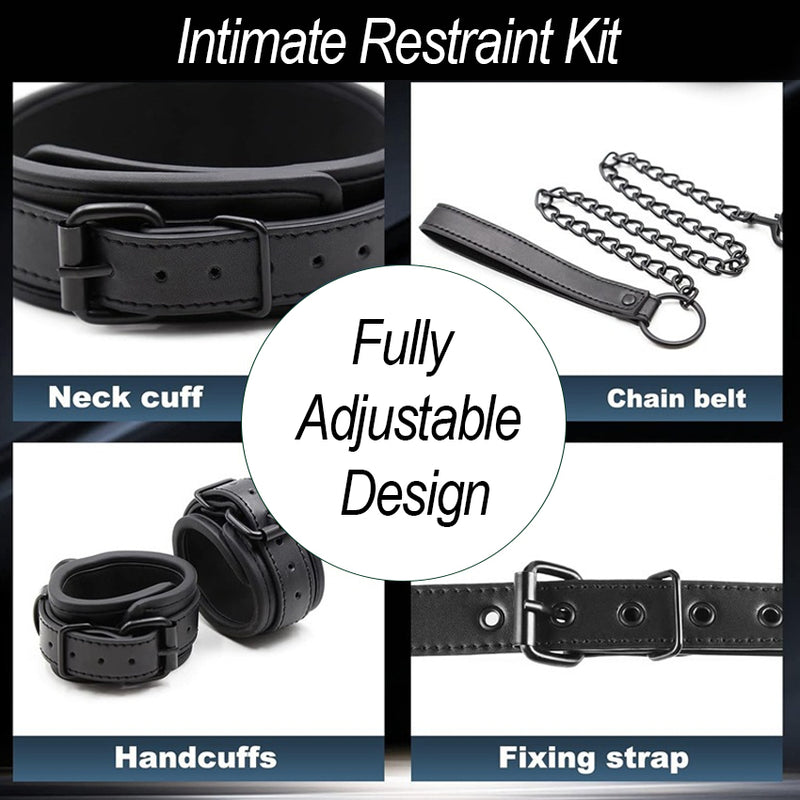
PU Leather Bondage Set – Cuffs, Collar & Lead Chain Combo — $43 NZD

The "starter kit in one box" restraint pick. Cuffs plus a collar plus a lead chain covers more of the dynamic than cuffs alone — the collar and lead introduce a different kind of control. Good value if you already know restraint play interests you and you want to skip buying pieces one at a time. PU leather is easier to clean than genuine leather and more beginner-forgiving.
Impact Starter Pick
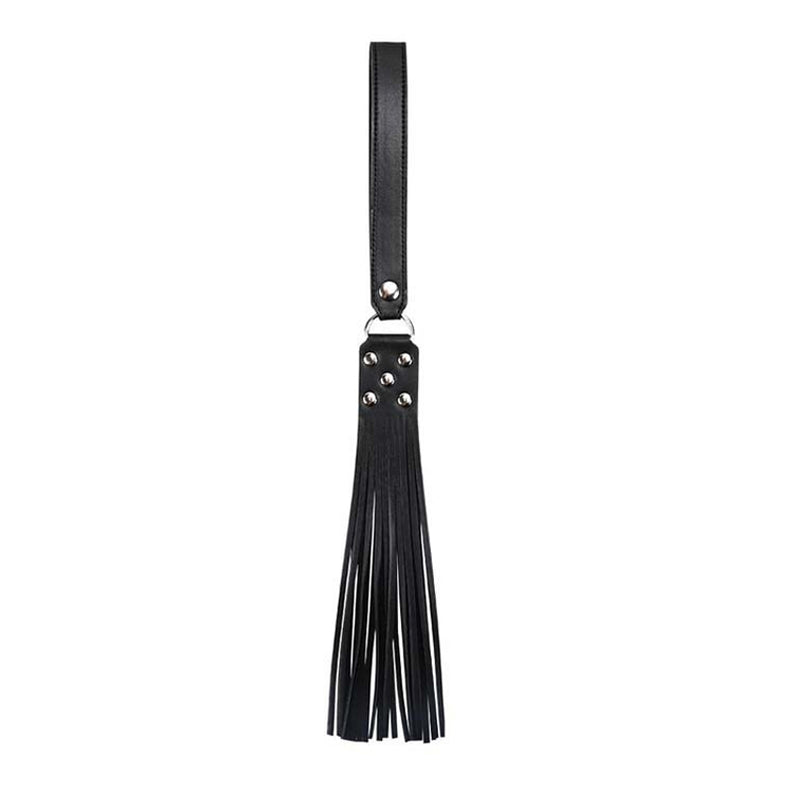
Genuine Leather Adult Play Whip & Paddle Set — $15 NZD

The beginner impact pick. A paddle has a broad, flat surface that spreads the impact — far more forgiving for beginners than anything with a focused or stinging contact point. The set includes a light whip for when you want to graduate to a different sensation. The rule bears repeating: start with the lightest taps and build up only with check-ins. You're learning your partner's response, not testing the toy's limits.
Browse impact implements as you build confidence.
Sensation Starter Picks
BDSM Pinwheel Mini Sensation Wartenberg Wheel — $10 NZD

The cheapest entry on this list and one of the best first buys. A Wartenberg wheel is a spiked roller that delivers light, prickling sensation as it moves across the skin — sharp enough to be felt clearly, not sharp enough to break skin when used correctly. Pair it with a blindfold and it becomes a study in anticipation. Genuinely one of the best $10 you can spend in this category.
Bell-Accented Secure Grip Nipple Clamps — $10 NZD

A sensation pick with a built-in beginner lesson: clamps teach you about gradual sensation and timing. The bell accents add a playful audio element. Start with brief wear times and adjust the grip — the sensation builds the longer they're on, and removal is its own distinct sensation. A good introduction to the "build and release" rhythm that runs through a lot of BDSM play.
If You'd Rather Start With a Kit
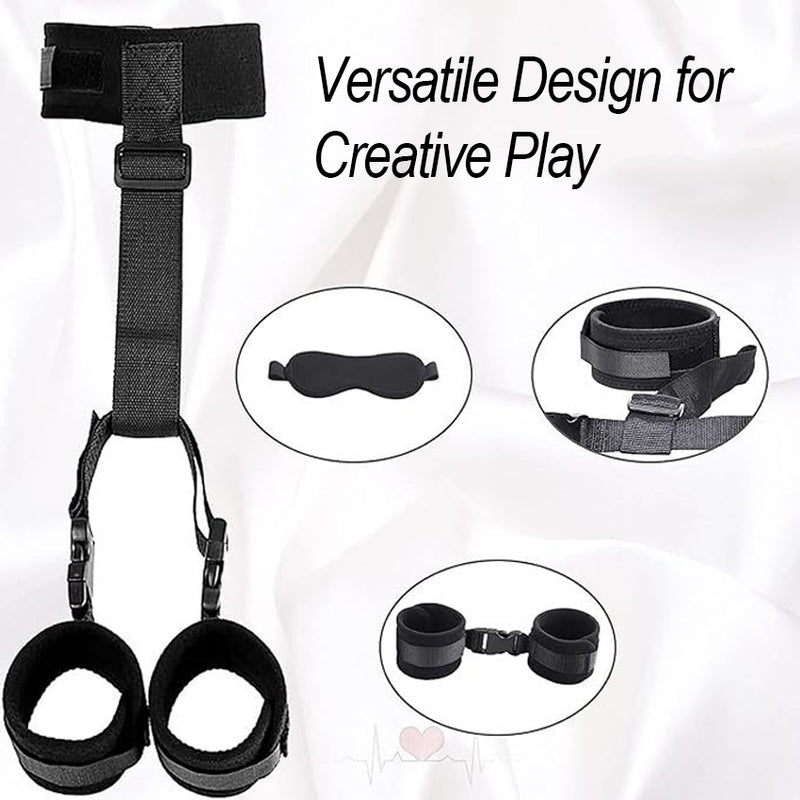
Premium Bondage Restraint Kit with Gag — $10 NZD

The all-in-one starter at the lowest possible price. Restraints plus a gag in a single $10 kit — a low-risk way to find out which elements you actually respond to before investing in better-quality individual pieces. If you include the gag, re-read the safeword section above: you need a non-verbal safeword (a dropped object or hand signal) any time speech is restricted.
How to Actually Start — A First Scene Framework
Pick one new toy per scene, not the whole kit
The mistake is laying out everything you bought and trying it all in one night. Pick one new element per scene. Learn how it feels, how your partner responds, how you both like to use it. The kit is a library, not a checklist.
Plan the scene out loud, in advance
Before anything starts, talk through roughly what's going to happen: who's doing what, what's on the table, what's off. This isn't unsexy — for most couples, the planning conversation becomes part of the anticipation. It also means nobody is guessing in the moment.
Start short — 20 minutes is plenty
A first scene doesn't need to be an epic. Twenty minutes of focused, intentional play with good aftercare beats two hours of improvising. Short scenes are easier to keep safe, easier to debrief, and leave you both wanting the next one.
Aftercare Basics
Physical aftercare (water, warmth, gentle contact)
Right after a scene: water to drink, a blanket if there's any shivering (adrenaline drop is real), and gentle, undemanding physical contact if both of you want it. Tend to any marks with the same care you'd give any minor skin irritation.
Emotional aftercare (check-ins over the next 24 hours)
The comedown from an intense scene can include an emotional dip — sometimes called "sub drop" or "top drop" — that can show up hours or even a day later. A simple check-in the next day ("how are you feeling about last night?") catches this. It's not a sign anything went wrong; it's a normal physiological response to intensity.
Why aftercare matters more than the scene itself
This is the framing competitors won't write: the scene is the part everyone focuses on, but aftercare is what determines whether the experience strengthens the relationship or quietly unsettles it. Couples who do aftercare well come back to BDSM as a shared, trusted thing. Couples who skip it often drift away from it without quite knowing why. Don't skip it.
Storage Discretion
BDSM gear reads as what it is — plan for that
Unlike a vibrator, which can pass as a generic object, restraint cuffs and impact toys are visibly BDSM gear if someone finds them. If you share living space, think about storage before your order arrives — a lockable drawer, a labelled storage box at the back of a wardrobe, or a dedicated bag. It's a small bit of planning that saves an awkward conversation.
How 1sttoy ships and labels orders
Every order ships in plain, unbranded packaging with no brand markings, no product names, and no explicit imagery. Tracking emails use generic descriptors — nothing in the subject line or inbox preview hints at the contents.
Frequently Asked Questions
What's the difference between BDSM and rough sex?
Structure, consent framework, and aftercare. Rough sex is spontaneous; BDSM is intentional and negotiated. The same physical act can be either, depending on whether there's a conversation around it, a safeword in place, and aftercare afterwards. The framework is what makes it BDSM rather than just intensity.
Do I need a "Dom" or "Sub" identity to try this?
No. Many couples switch roles scene to scene, and plenty never use the labels at all. Dominant and submissive are roles you can step into for a scene, not identities you have to claim. Try both sides if you're curious — most people are surprised by what they enjoy.
What's a safeword and how do I pick one?
A word neither of you would say accidentally during a scene, meaning "stop now." The traffic-light system (red = stop, yellow = slow down, green = continue) is the most common and the easiest to remember. Pick it before your first scene, and never punish or question its use.
Are these toys safe to use anywhere on the body?
No — and this matters. Impact play should stay on the fleshy areas (buttocks, thighs) and avoid the lower back/kidney area, the spine, joints, and the head/face. Never apply impact or restriction to the front of the throat. Breath restriction of any kind requires specific training and carries real risk — it is not a beginner activity. When in doubt, keep it to the safe zones and go gentle.
What if my partner enjoys it more than I expected?
Common, and good. Discovering that you or your partner responds strongly to something is the entire point of trying. Talk about it afterwards, not during — the debrief is where you decide what to explore next.
How do I clean restraint gear?
Material-specific. PU leather and faux leather wipe clean with a damp cloth and mild soap. Genuine leather needs a leather-specific cleaner and should not be soaked. Fabric and rope restraints can usually be hand-washed and air-dried. Metal components (chains, buckles) wipe clean. Always dry fully before storing to prevent mildew.
What if I want to try more after the starter kit?
The natural progression from a starter kit is usually toward rope work, more varied impact toys, or longer negotiated scenes. Build slowly, keep the three rules central, and add one new element at a time. Browse the full BDSM range when you're ready for the next piece.
Ready to Start?
If you can only buy one item to start, pick the Wartenberg pinwheel at $10 NZD or a blindfold. Sensation play is the gentlest entry to BDSM, the pinwheel costs less than a coffee, and it re-uses indefinitely. It teaches you the anticipation-and-sensation rhythm that everything else builds on — without any of the intensity that makes beginners nervous.
Plain packaging, no branding on the outside. Discreet shipping matters more for BDSM gear than most categories — and we ship every order that way as standard.
Not sure where to start? See The Edit, our short list of picks.